
Paddy’s Christmas Cruise
Never Kiss a Man in a Christmas JumperThis flow follows Paddy’s decision to take a holiday cruise and the family’s effort to protect one another from guilt, showing how affection can turn into concealment when everyone tries to appear self-sufficient.
increasing Bearing strength in each event
 decreasing
Bearing strength in each eventdecreasingThe Cruise Offer
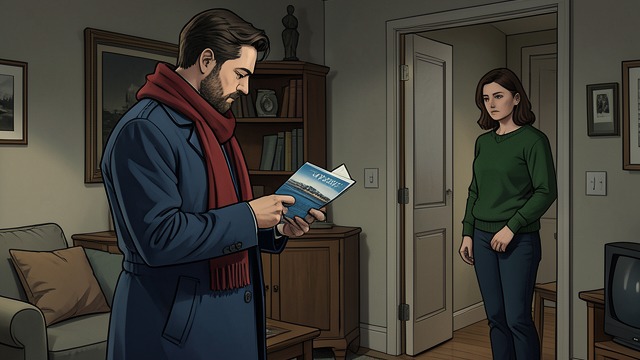
A Holiday Elsewhere
An unexpected invitation
Paddy tells Maggie that his friend Jim has been offered a last-minute cabin on a cruise to the Canary Islands. The trip promises sunshine, company, and plenty of drink, and Paddy admits that he is tempted to go.
The news comes at a moment when Maggie is already learning that Ellen may spend Christmas in Paris. She says the cruise sounds lovely, concealing her disappointment that the familiar family gathering may not happen.
Independence with an emotional cost
Paddy is not abandoning Maggie deliberately; he believes she will be fine and expects that Ellen will be home. His plans reflect his recovery from earlier years of drinking and withdrawal, as he has built an active social life of his own.
For Maggie, however, his invitation reveals how quickly the household’s old arrangements are changing. She wants her father to enjoy his life, but fears becoming the sole person left behind while the rest of her family moves forward.
The Hidden Departure

A Goodbye Disguised as Cheer
Christmas as an old promise
Maggie has always loved the family’s imperfect Christmas meals because they were shared by her, Ellen, and Paddy. Burned potatoes and overcooked turkey mattered less than the continuity of being together, a tradition that has stood since Ellen’s birth.
When Paddy prepares to leave, Maggie looks across at the lit houses and realizes that this may be her first Christmas alone. She answers with a joke about alerting the British Embassy, using humor to keep her disappointment from becoming a request for him to stay.
Care becomes concealment
Paddy leaves for his local pub and his impending holiday, while Maggie watches him go through the snow. She does not tell him that Ellen also plans to be away, hoping to spare him worry and preserve his enjoyment of the trip.
The silence is meant as kindness, but it leaves Maggie carrying the emotional burden alone. Her effort to protect her father from guilt also prevents him from choosing how he wants to respond to her need for company.
The Conflicting Stories

Two Versions of Christmas
A story for each person
Maggie lets Ellen believe that Paddy will be around for Christmas and lets Paddy assume that Ellen will be home. Each lie is meant to keep the other person free to enjoy a holiday away without feeling responsible for Maggie.
The arrangement is fragile because it depends on two people who know each other well. Maggie recognizes that the truth will eventually come out, but postpones the conversation because she cannot yet face the possibility of their guilt or the confirmation of her own solitude.
A protective impulse backfires
Maggie’s deception shows how deeply she equates asking for care with becoming a burden. Instead of explaining that she is frightened of spending Christmas alone, she tries to manage everyone else’s feelings through a private plan.
The concealment creates the very anxiety she hoped to prevent. Her family’s eventual discovery will make clear that the problem is not their lack of love, but Maggie’s belief that accepting love means denying other people their freedom.
The Pubside Discovery
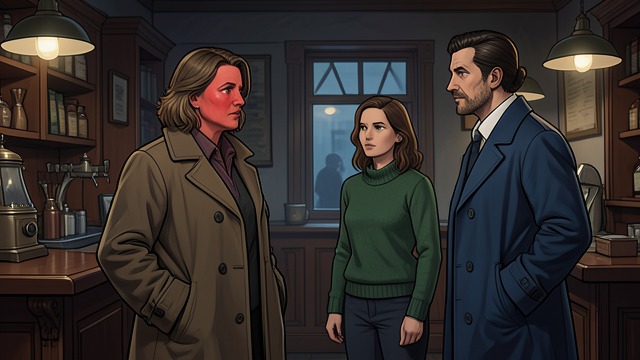
The Family Compares Notes
A coincidence exposes the lie
At the pub, Maggie finds Ellen and Paddy already together. Ellen has asked to borrow her grandfather’s suitcase and learned that he plans to travel; the two have compared what each was told and recognized the contradiction.
Ellen confronts Maggie sharply, asking why she assumed they would not speak before Christmas. Her anger is intensified by concern: she does not want her mother to be left alone, even though she wants to travel to Paris.
Love expressed as protest
Paddy explains that he and Ellen would rather change their plans than leave Maggie by herself. Their offer is loving, but Maggie refuses to let them cancel, insisting that she is an adult and does not need to be looked after.
The exchange reveals that the family’s traditional closeness has not disappeared; it has become more complicated as each person seeks independence. Maggie’s challenge is to accept that her loved ones can care for her without giving up the lives they have chosen.
The Family Keeps Its Plans

Affection Without Cancellation
A boundary held
Maggie tells Ellen and Paddy that she will not allow them to abandon their trips solely to prevent her from being alone. She admits the plans were concealed, but maintains that they should still enjoy Paris and the cruise rather than turn Christmas into an act of supervision.
Her response is not a denial that she will miss them. It is an attempt to separate love from obligation, even though she is still struggling to believe she can be cared for without becoming someone else’s responsibility.
A new family arrangement
Marco tells the family that Maggie will not be alone because she is going to Scotland with him. His assurance gives Ellen and Paddy a practical reason to continue their plans and lets them accept the separation without feeling they have left Maggie unsupported.
The arrangement is partly a fiction, since Maggie has not agreed to go, but it resolves the immediate family standoff. The episode shows how the family uses humor, reassurance, and imperfect plans to preserve both connection and individual freedom during a changing Christmas.
Several days after Marco arrives at Maggie’s home
The evening Paddy tells Maggie about the cruise
The days before Ellen leaves for London
The evening before Ellen’s departure for London
The same evening at the pub
